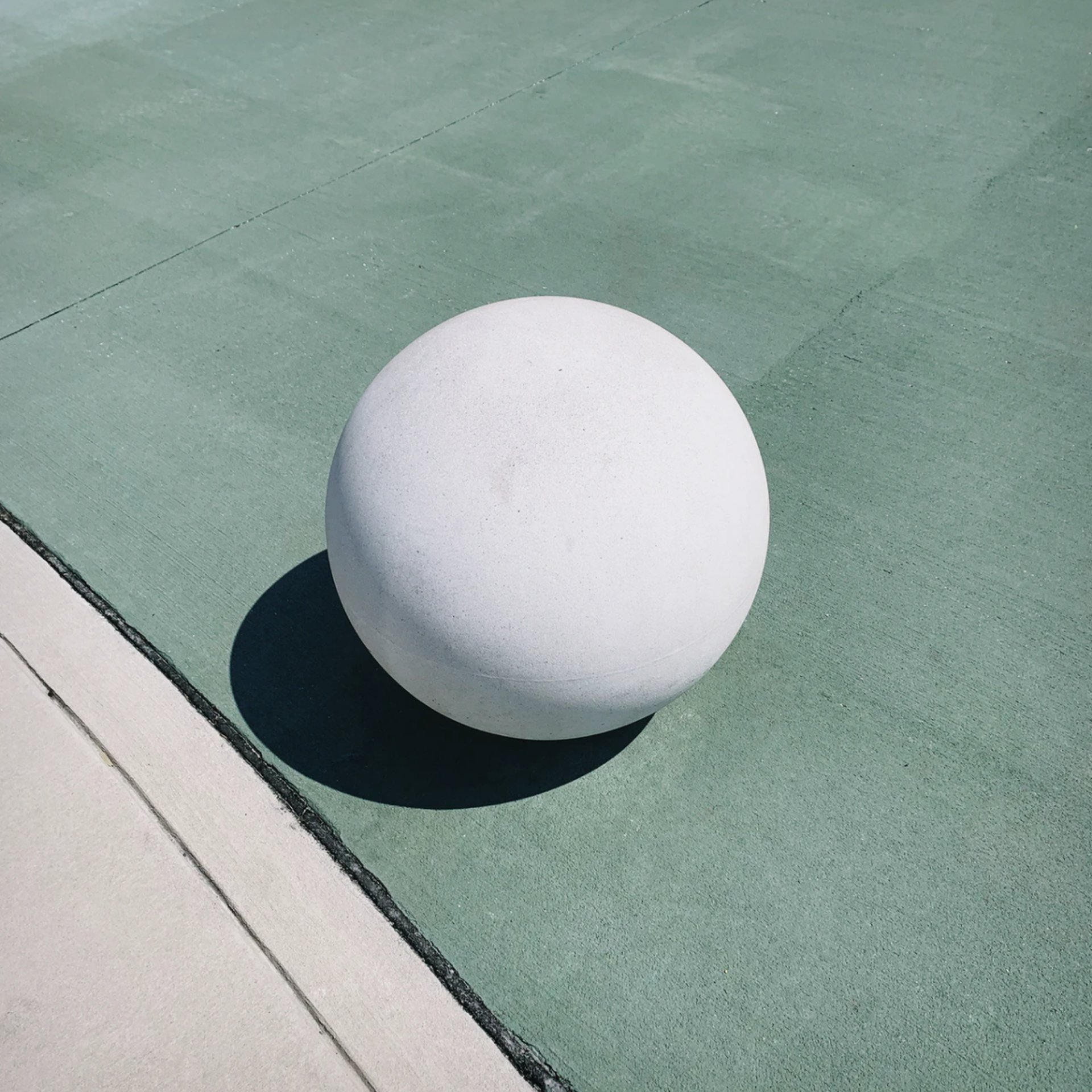


Situated amidst the decaying structures of Bagong Lipunan Condominium (BLC), this public art installation A Soliloquy for New Society acts as a refrain to AJ Raymundo’s recurring concentrations on the reverberating Marcosian legacies of violence and attending to the act of salvaging materials vis-a-vis allusions to narratives of progress and development entrenched in center and peripheries of the urban.
Most recently, Echoes of Decay a film screening he programmed at the Ateneo Art Gallery featured two documentaries: Federico Espiritu and Jose Cuaresma’s Sabangan (1983), and Joanna Robles’ Dambuhalangang Panganib (2020, ongoing). Through Sabangan, Raymundo shifts our frame of attention towards the ecological degradation caused by Marcosian megadam projects and neoliberal environmental policies – namely the Kaliwa and Kanan Dam project and the Timber License Agreements Marcos Sr. apportioned to his cronies. He then locates its echoes to today, through Dambuhalangang Panganib, a documentary situated in the struggle of the people of Pakil, Laguna against the ongoing “development” of grey infrastructure around the same area of Sierra Madre and Laguna Bay. Foregrounding the human and environmental costs of these mega-“development” projects reveals the decay within the repetitive invocation of Imeldaic the “true,” the “good,” and the “beautiful” and the continual renewing of the mythos of progress and modernity.
This critique extends to his short video piece Nagtatayugan, nangasisilawak, at nagiingay ang mga latang walang alam (2023), an earlier work, alluding to Romulo Sandoval’s poem “Tumatayog, lumalawak ang mga bilding at resort” from 1970, now projected on a wall of BLC. It was produced by the superimposing of retrieved archival footage from Martial Law and snippets of contemporary urban life accompanied by a field recording of a CCP show and a voice of a call center agent slowly overlaid as counterpoint. Layers of moving images and sound accrue, presenting the ironies of the “City of Man;” situatedness asks of us to occupy multiple temporalities at once.
During his residency in Japan, Raymundo found solidarity with the Pacific Islander residents in their shared experience of the still very present effects of colonialism and the disproportionate effects of climate change. He holds onto this encountering in his work Intrinsic Value (2023) along with the convergences of the act of salvaging; to the “shared ritual of remembrance” of tying ribbons on twigs which branches out further to “the laborious, contemplative ritual of being together” and the attending to materials “exempt from the visions of progress.” His modus of salvaging materials “as an act of signification” then and now continues to thread along the multiplicities and temporalities of the word “salvage” from the systematic killings then subsequently finding of the bodies of victims during Martial Law, which reverberates to the Duterte-era tokhangs and extrajudicial killings (EJKs), to “the excavation of the histories of the situ.” This performance/ritual recurs in this exhibit now situated in a Marcosian housing “development.” Once again he excavates for histories, now entangling it with his own personal and cherished memories of childhood – as he mounts Soliloquy for New Society returning to a site which is both edifice and which was once a place where he dwelled, grew, was nurtured by.
In his other work in this exhibit of canvas frottaged with concrete and tree branches, the histories of the human and the “natural” which both continue to suffer atrocities meld in their textural resonances. Impressions of the often tacit but ubiquitous environmental exploitation and human suffering is made visible and felt with every gesture of this automatic method. But in attending to the granular, Raymundo also salvages for the potentialities of collaborations between humans and more-than-humans.
A Soliloquy for New Society is an assemblage of works that meets and occupies a site of decay which is concurringly welcomed and lamented – a ruination of an edifice but also of a place of dwelling– intoning what persists to exist and what cannot be left behind.
Text by Francine Racimo